
Archives: News Stories
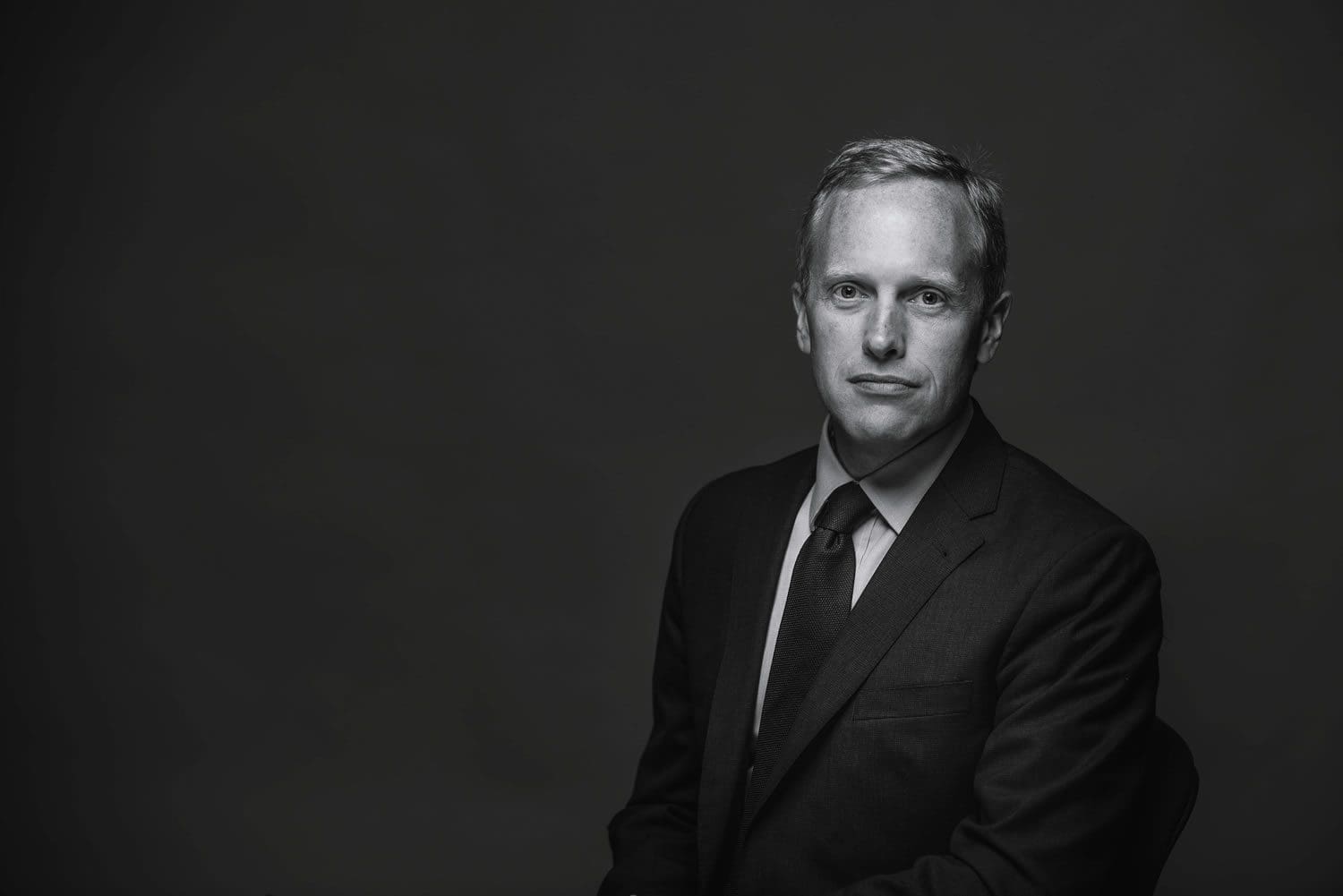
President Kurt Dykstra shared the following reflection with the Trinity campus on October 29 following the mass shooting at Tree of Life Synagogue in Pittsburgh, PA. As it is a message that extends beyond that particular event, it is reprinted in full below.
Trinity Community:
Perhaps you, like me, are starting your week with heaviness upon your soul. The last week in our nation’s history has been one that we hope will not repeat: attempted bombings, attempted shootings, massacres at houses of worship – which is to say nothing of the “ordinary” stories of violence, injury, and death that accompany every week. We are right to pray for victims and their families, for our nation and world. We are right to think about how we might, through policy or legal means, evaluate existing paradigms and ponder whether new ones might alleviate some of the terribleness that seems to surround modern life.
To appreciate history is to know that these are not the first days of extraordinary violence that our nation has witnessed. Fifty years ago, this nation endured a series of extraordinarily violent acts – from bombings to assassinations – that, I pray, is unlike anything that we will see in our day. One hundred and fifty years ago, there were plots, and some actions, to burn down significant parts of New York City in order to sow terror among our own people. As a nation, we long have experienced vicious political campaigns and visceral hatred of one group by another. These are but a few examples. None of this is new, though it may be fresh to us. All of this is horrible, whether of recent vintage or consigned to history.
What then are we at Trinity to do? We acutely understand that evil lurks at every corner – this is part of our theology. Yet, we also deeply know that this is not the way it is supposed to be, that Jesus Christ has broken the chains of death, and that there will come a day when lion and lamb lie down together and there will be no more strife – this is a bigger part of our theology. How do we remain faithful and present today, while also claiming the hope that we know is coming?
That is the question that many of the faithful are asking, Christians of all sorts and non-Christians, too.
First, we pray. That is where we always start. We pray for victims and families. We pray for hearts to turn toward God. We pray for our nation and world. We pray because we believe that God can do more than we ask or imagine, because it is what God’s people have been doing for millennia, and because it is what Jesus himself did in times of trouble.
Second, we comfort. God’s people have been the ones to show up over time and history. Yes, we care for spirit – but also for mind and body, too.
Those two items are our “given;” they are what Christians do, time after time, tragedy after tragedy. And they are no small things, either. We should never doubt that they are big, faithful, important acts. We often call on these things especially after some sort of event of evil or tragedy. What else might we be about that helps us to faithfully live in our fallen world?
I cannot help but think of the current divisive state of American life. To know that this isn’t the first such occurrence of societal discord – or even the worst – offers some comfort, though in limited quantity.
Trinity, I am convinced that we have a role to play, our little school tucked away in a middle ring suburb in the Midwest. Our world needs Trinity, and places like her, to be a faithful presence throughout society, to be a leavening agent – or better yet, to be salt and light in the world.
This is not the first significant season of discord in American life. It is not the first time of witnessing extraordinary violence and terror. At the same time, this is our season to be a faithful presence and, in this season, there are broader cultural and technological realities that make our faithful work more challenging. You have heard me say something like the following on more than a few occasions:
Our world, more and more, is comprised of autonomous actors organizing their lives as they see fit, abetted by technology and without the leavening influence of mediating organizations to help them rise above their base interests. We are more able than ever to live in self-created bubbles and do so with increasing regularity: “red” places become redder and “blue” places bluer, we can consume our news from the sources we choose, associate with the people with whom we want to be associated, and live in the places full of people like us. Those places that, generations ago, helped to mold, shape, fence, and guide, at best largely have shed their authority and, at worst simply no longer exist.
This bubbling or clustering has very real societal consequences. It is much easier to assume the best about ourselves when everyone we know thinks and acts as we do. Conversely it is much easier to assume the worst about those different from us when “those people” can be kept as an abstraction or reduced to a caricature.
While, thankfully, the actors who have engaged in these acts of extraordinary violence over the past few years are far outside the American mainstream, the breaking news is barely reported before noxious tribal finger pointing and posturing begins. Surely hacks and partisans will always be among us, but I cannot help but believe that sizable “like-minded clustering” plays a role in the impulse for vitriol at others. If one’s friends, one’s news sources, one’s social media followers and feeds, one’s network of influence see the world in identical fashion, how can one not see the best in ourselves and the worst in others? Abstractions are neat, clean, and easy; actual people are messy and relationships are complicated. Too much of American society is too invested in abstraction and too devoid of actual people and complicated relationships. A 2003 essay in The Atlantic has stuck with me for over 15 years, as has this line: “Many of us live in absurdly unlikely groupings, because we have organized our lives that way.” (I commend the entire essay to you.)
When we at Trinity talk about vocational calling across the disciplines, or when we understand that “every square inch” of the creation and culture matters to God, or when we speak about being agents of restoration in our culture, or when note that we are trying to get in on what God is doing in the world, we are expressing that we seek to faithfully live as God’s children in this world. We are not a tribal people!
And, in part, I firmly believe that the state of our culture reflects the state of the Christian witness “beyond the bubble.” Writing during the Second World War, C.S. Lewis penned one of his most important works, The Abolition of Man. Many of us have read it and, more than a few, repeatedly. In it Lewis argues that it is the human chest that mediates between the head (“cerebral man”) and the heart (“visceral man”) in a way that allows human beings to be truly human. It is the chest where “emotions [are] organized by trained habit into stable sentiments” so that humanity truly can be moral creatures. Take away moral truth – make “Men Without Chests” as the chapter is titled – and societal disaster follows:
And all the time — such is the tragi-comedy of our situation — we continue to clamour for those very qualities we are rendering impossible. You can hardly open a periodical without coming across the statement that what our civilization needs is more ‘drive’, or dynamism, or self-sacrifice, or ‘creativity’. In a sort of ghastly simplicity we remove the organ and demand the function. We make men without chests and expect of them virtue and enterprise. We laugh at honour and are shocked to find traitors in our midst. We castrate and bid the geldings be fruitful.
Friends, we are called to be a heady, hearty, and “chesty” people and to be so in every nook and cranny of the world in which we live. That is why at Trinity we devote so much time and attention to developing both disciplinary knowledge and a broadly Christian worldview.
We are made to be Christ’s Ambassadors in our local communities, yes, but also in the broader culture and world. As University of Virginia sociologist, James Davison Hunter, has argued, to change culture requires a cadre of influential persons positioned in influential institutional places, with influential expertise and training, and possessing influential networks of good and like-situated persons. It requires the right people, with the right training, in the right networks, in the right places. It is a serious and important undertaking. It is what you and I are called to do and be, even as we live our daily lives of seeming routine.
Tree of Life Synagogue in Pittsburgh, where the massacre occurred on Oct. 27, has a wonderfully biblical name. One cannot help but think of Genesis 2 where God creates the tree of life among all other kinds of trees. Perhaps a lesser known reference of the tree of life is found in Proverbs 3:18: “She [wisdom] is a tree of life to those who lay hold of her; those who hold her fast are called happy.” Even in the midst of this horror and evil, God speaks through a name, for Proverbs 3 continues this way:
My child, do not let these escape from your sight:
keep sound wisdom and prudence,
and they will be life for your soul
and adornment for your neck.
Then you will walk on your way securely
and your foot will not stumble.
If you sit down,[a] you will not be afraid;
when you lie down, your sleep will be sweet.
Do not be afraid of sudden panic,
or of the storm that strikes the wicked;
for the Lord will be your confidence
and will keep your foot from being caught.
Do not withhold good from those to whom it is due,
when it is in your power to do it.
Do not say to your neighbor, “Go, and come again,
tomorrow I will give it”—when you have it with you.
Do not plan harm against your neighbor
who lives trustingly beside you.
Do not quarrel with anyone without cause,
when no harm has been done to you.
Do not envy the violent
and do not choose any of their ways;
for the perverse are an abomination to the Lord,
but the upright are in his confidence.
The Lord’s curse is on the house of the wicked,
but he blesses the abode of the righteous.
Toward the scorners he is scornful,
but to the humble he shows favor.
The wise will inherit honor,
but stubborn fools, disgrace.
Proverbs 3 is a call for faithfulness, confidence in the Lord, assurance, holiness, and engagement with the world. Those are precisely the words that we all need to hear on this day as we pray, comfort, and take up our task, as Trinity’s mission states, “to be coworkers with Christ in subjecting all cultural activities to the reign of God.”
The Trinity community was blessed to welcome Dr. Miroslav Volf, Dr.Theol., Henry B. Wright Professor of Systematic Theology and Founding Director of the Yale Center for Faith and Culture, for several events on Oct. 25.
Volf discussed “Vocation and a flourishing human life” on campus and downtown Chicago as part of the College’s WorldView Series and Downtown Lecture Series.
While we live in the mundane realm, we must strive to embrace the transcendental world if we are to flourish, he said. “The world, even the flawed world, is a gift from God,” Volf told his audiences.
In his discussions, Volf explained his view of the relationship between our calling and our flourishing. “We should affirm the goodness of everyday, ordinary life,” he said. “Yet the paradox is that we find ourselves alienated precisely from the things that will satisfy ourselves.”
In our struggle to reconcile our calling with a flourishing life, Volf described the challenges presented by today’s age, with its emphasis on economic, educational, reputational, and aesthetic capital. “How much time do we spend acquiring these four modes of capital?” he asked. “We are like a dog chasing its tail.”
We also tend to inflate the negative, and become blind to the good around us. We must learn to celebrate the good in life, which is given to us by God. When we become too busy to hear God’s call, we are unable to heed his message.
He compared the struggles we face with the souls in in Canto III of Dante’s “Paradiso,” who “only long for what we have.”
He also cited Adam and Eve, their inability to avoid the fruit from the forbidden tree, and their decision to hide from God, who called to them, “Where are you?” Volf said he believes the forbidden tree was placed it the center of the Garden of Eden to remind Adam and Eve of all the blessings they had, not to torment them with what they couldn’t have. “It underscores that everything else is given to them. It was a reminder, not God’s perverse desire to taunt them.”
Volf also suggested that his audiences rethink what they strive for and encouraged them to revisit how they view the Sabbath, and to use it as a break from striving—not as a day to prepare to take up striving again during the rest of the week.
Volf’s lunchtime presentation was the inaugural event for the three-part Downtown Lecture Series, “Working toward a good and satisfying life for you, your communities, and the world.” The series is sponsored by Trinity, Chicago Semester, and Grace Chicago Church.
WorldView is Trinity’s annual community and college series for film, word, current events and music, held at the college. As part of WorldView, Dr. Scot McKnight, Julius R. Mantey Chair of New Testament at Northern Seminary, will be on campus on Nov. 7 as the guest speaker at Chapel at 10 am, and an evening lecture at 7 pm.
As part of the Center for Pastor Theologians Conference, Trinity’s Counseling Center Director Stephanie Griswold, Psy.D., recently took part in a panel discussion on how the church in general and pastors in particular can help care for victims of trauma and abuse.
“The panel had a wide range of voices, from a person who was an academic theologian, a person who was a pastor and a psychologist, and myself,” said Griswold. “Overall, the conference was trying to equip and challenge pastors to bridge conversations about faith and the field of mental health.”
The panel also explored how the Gospel addresses and offers healing to the most victimized and vulnerable in human communities.
This year’s conference, “The Art and Science of Spiritual Formation,” took place from Oct. 22-24. The annual event is hosted at Calvary Memorial Church in Oak Park, Ill., where Griswold attends. Next year’s conference, which will explore “A Christian Vision of Technology,” will take place from Oct. 14-16, 2019.
Trinity was excited to welcome nearly 100 high school students from four regional high schools to the inaugural Innovation Olympics on Oct. 18. Students from Chicago Christian, Timothy Christian, Naperville North, and Naperville Central competed in five events that were centered around innovation, creativity, and teamwork.
“This was a great experience for all of our students,” Bryan Peckhart, Instructional Coordinator of the CTE Department at Naperville North High School. “They were able to apply a variety of important life skills in a competition style setting at the collegiate level. The students problem solved, communicated, innovated, collaborated, and presented to business professionals in a team environment. These are all essential skills students must learn and be able to apply in order to be successful in any job in the future.”
Nearly two dozen Trinity students, faculty, and staff volunteered their morning to coach the high school students through the different events, which included an obstacle course, developing and pitching an idea for an app, building a structure made of paper, safely guiding a blindfolded partner, and creating a hypothetical product for a specific audience.
The students enjoyed the events and provided positive feedback, said John Wightkin, Assistant Professor of Business and Department Chair. “This also represented an opportunity to demonstrate how Trinity is inspiring innovation, creativity, and teamwork across our campus and through Fusion59, Trinity’s own newly opened innovation hub, and in Chicago through our University Partnership with 1871, the nation’s largest center for technology and entrepreneurship in downtown Chicago,” he said.
Following the event, the high school students toured different spaces on campus, including Fusion59, before heading back to their schools.
Wightkin was inspired to launch the High School Innovation Olympics after running similar events for several grade school entrepreneurial camps in Chicago and Aurora, Ill. He identified the four high schools from relationships he has developed in helping the high school’s entrepreneurial programs over the last year. Wightkin and the Business Department plan to host another Innovation Olympics next year.
Trinity was well-represented at the recent Conference on Faith and History, with presentations by Matt Koerner ’19 and Professor of History and Department Chair John Fry, Ph.D. The conference was held from Oct. 3-Oct. 6 at Calvin College in Grand Rapids, Mich.
Koerner, who is double majoring in History and Theology, presented as part of the Conference on Faith and History Biennial Undergraduate Conference. His paper, “The Templars: Wrongfully Condemned,” was part of a session on “Reconsidering the Religious Past: Historians, Knights, and Persecutors.”
As part of the 31st Biennial Meeting of the Conference on Faith & History, Fry took part in a roundtable discussion of “Biography and the Search for Meaning,” where he discussed “Biography, Meaning, Audience, and the Faith of Laura Ingalls Wilder.” He is currently working on a book about the author of the “Little House” books, as well as maintaining a blog about his research.
The Conference on Faith and History was chartered fifty years ago to uphold, study, and improve the complex relationship between Christian faith and the discipline of history. The organization explores how Christian faith in all its manifestations (Protestant, Catholic, Orthodox) plays a role in the lives of individuals as professionals, writers, teachers, and colleagues. This year’s conference theme was “History and the Search for Meaning.”
For high school students who love the arts, from visual arts to music to theater, Trinity is hosting a special weekend, where they can learn more about the College’s art, music, and theatre programs The Trinity Arts Experience will take place on Nov. 8-9.
High school students and their families will be able to meet with faculty and current students, and explore how our location in Palos Heights, offers nearly limitless opportunities in nearby Chicago.
High school seniors can also audition for scholarships during their visit.
Students can choose to follow a Theatre, Music, or Art track during their time on campus.
ART & DESIGN students will have the chance to:
- Meet with a visiting artist
- Visit studios and a design firm in downtown Chicago
- Tour the Art and Communications Center
- Submit a portfolio for scholarship review (seniors only)
MUSIC students will have the chance to:
- Attend a Chicago Symphony Orchestra concert
- Visit a music class
- Take in the Faculty Music Recital
- Audition for an instrumental or vocal music scholarship (seniors only)
THEATRE students will have the chance to:
- Take a backstage tour of a Chicago theatre company
- Attend the final dress rehearsal of a Trinity production
- Tour the Marg Kallemeyn Theatre
- Audition for an acting or technician/designer theatre scholarship (seniors only)
For more information, click here.
We all bear the image of God’s design, and we worship when we fulfill God’s purpose, this year’s Freshman Lecture speaker Blair Allen told Trinity first-year students, visiting high school students, and others in attendance in Ozinga Chapel Auditorium on Monday.
Allen, who is the senior producer and co-host of NASA Edge, a video podcast for NASA, discussed a range of topics during the lecture, including what it is like to be a Christian working for a science-based government agency like NASA, stories about the space agency’s current and past projects, and his experiences during the 2017 total eclipse.
“Two aspects of my job are informed by my Christian faith,” said Allen. “That is my role as a scientist, and my role as a producer.”
Reconciling faith and science can sometimes be challenging, he said. “As a government agency, NASA is agnostic—pun intended,” he said. “Sometimes, many people struggle with the theories and pre-suppositions involved in NASA’s work.” In his role as a producer of NASA Edge, he often has to make complex concepts and projects understandable to a general audience. “I have a responsibility to give NASA’s scientists and engineers the opportunities to tell their stories.”
Allen reminded the audience that we are explicitly created for work and discussed the similarities between the mission of NASA and the Creation story. According to the agency, its mission is to “[d]rive advances in science, technology, aeronautics, and space exploration to enhance knowledge, education, innovation, economic vitality and stewardship of Earth.” The first chapter of Genesis describes God’s charge to Adam and Eve, including the 28th verse: “God blessed them and said to them, “Be fruitful and increase in number; fill the earth and subdue it. Rule over the fish in the sea and the birds in the sky and over every living creature that moves on the ground.” [NIV]
Allen was introduced by Professor of English Mark Jones, Ph.D., who has known Allen since they attended Covenant College as undergraduates.
Following the lecture, several groups of students visited Adler Planetarium in Chicago with Allen.
Trinity’s annual Freshman Lecture enriches the core experience for freshman students by engaging them in a challenging but enjoyable learning opportunity outside the classroom setting.
Trinity hosted the Restorative Justice and Practice in a Fragmented World conference on October 6, sponsored by the Criminal Justice Department and funded by the Andrew Elliott Rusticus Foundation.
It occurred at the end of a week of a high-profile trial and final verdict in Chicago involving Jason Van Dyke, a police officer who shot and killed a young suspect, Laquan McDonald, as a dashcam appeared to show McDonald walking away – a version challenged by the defense. A murder verdict on the officer came down Friday afternoon, hours before the conference. Three of the conference’s presenters were on duty, with leaves cancelled, including Cook County, Ill., Sheriff Tom Dart. According to one of the conference’s organizers, Brad Breems, an emeritus Trinity professor, it was still unclear on Friday evening if those presenters would be able to attend. This event sharpened the salience of restorative justice (RJ), an emerging community-based approach to treating lawbreaking, adjudicating, and sentencing, Breems noted.
Along with Dart, other speakers included Restorative Strategies CEO Robert Spicer; Al Ferreira, a lead Chicago Police Department (CPD) procedural justice trainer; and Professor John Marshall Law School’s Michael Seng.
“The conference brought influential people in the field to our campus,” said one organizer, Brad Breems, an emeritus Trinity professor, “and embodies the spirit of Andrew Rusticus ’03, who exemplified restorative justice practices as a police officer before he died in training for a new position.”
The conference began with a welcome by Trinity President Kurt Dykstra, and included remarks by Roland Rusticus for the Andrew Elliott Rusticus Foundation.
Dart’s keynote address, “Restorative Justice in Criminal Justice Diversion Programs,” captured the audience with his sharp critique and stark alternatives to unequal and ineffective incarceration practices. Dart challenged systems that merely pass people on to another facility or back into society, no better than when they came entered. He enlivened his speech with poignant first-person videos, followed by a lively Q & A. “The end of his part of the program came palpably too soon for the audience,” said Breems.
Participants then broke to hear and discuss topics like murder victim families’ encounters with restorative justice in separate workshops by Gail Rice and Bill Jenkins; new restorative police-community relations by CPD’s Vanessa Westley; and retired Judge Sheila Murphy’s recount of her judicial enlightenment through restorative lenses. An insightful panel moderated by Sara Balgoyen, Director of Illinois Balanced and Restorative Justice concluded the morning sessions.
After lunch, another round of concurrent sessions highlighted RJ in schools and in legislation to govern restorative justice courts that will replace traditional courts when appropriate. Ferreira, a leading CPD and U.S. Department of Justice tactical and implicit bias trainer, stimulated conferees and linked to the current climate of tense, sometimes tragic, law enforcement-and-community interactions.
In his closing address, “Aspirational Justice: A New Paradigm for Healing and Radical Justice in a Fragmented World” Spicer offered a careful study of three centuries of slavery and another century of repressive slave codes and Jim Crow laws. He contrasted that to his range of proposals based on the U.S. Constitution and other seminal U.S. laws and documents. In response to America’s misappropriation of African Americans, he challenged and charged our society to apply principles of restorative justice to the underlying problem of social inequality.
In his closing, Breems remarked, “Trinity Christian College and its criminal justice program assert that the restorative justice perspective is essential as a progressive approach to social norms, law enforcement, peace-making, and peace-keeping. This conference and Robert Spicer’s innovative model show a way to a more just and peaceful America.”
For social entrepreneurs, messaging and action need to be woven together, according to a new book by Dr. Craig Mattson, Professor of Communication Arts and Honors Program Director. Mattson’s book, Rethinking Communication in Social Business, was published in August of this year.
Mattson has been studying social entrepreneurship, or companies that take a business-focused approach to social problems, since 2007, when a student first asked about Product Red in a rhetorical criticism class. Subsequent faculty/student research on Bono’s campaign to harness the power of people and companies to fight AIDS in Africa led to Mattson’s own researching and writing articles on the topic of business-driven problem-solving.
But it was a big jump to go from writing individual essays to taking up a book project. He credits several colleagues with encouraging him to write a book about the topic, including Professor of English Michael Vander Weele and Professor of Philosophy Aron Reppmann. In October 2016, while preparing for his sabbatical, the prospective for his book was accepted by Lexington Press. He drafted much of the book while on sabbatical in the spring and summer of 2017. “I do feel like this was really a Trinity project,” says Mattson. “It came about from conversations with students and colleagues, and it represents the entrepreneurial spirit on campus.”
As part of his research for the book, he interviewed Chicagoland social entrepreneurs, including Laura Zumdahl ‘02, CEO of New Moms. “I wanted the project grounded in the experience of practitioners in the field,” he noted.
The book examines social entrepreneurial businesses of all sizes, from large companies like Warby Parker and TOMS, to smaller operations like Clean Slate and Zumdhal’s Bright Endeavors. According to the book, “These companies respond not only to a felt proliferation of humanitarian and environmental predicaments, but also to enormous shifts in in public feelings and technological sensibilities. These predicaments make social entrepreneurships urgently needed and remarkably complicated. But if social entrepreneurs deal with that complexity with a business-as-usual approach to making the world better—imitating, for example, corporate social responsibility initiatives by transnational companies—they will lose their vital distinctiveness and efficacy.”
In his book, Mattson attempts a transdisciplinary perspective, using close rhetorical analysis and qualitative interviews with social entrepreneurs, in order to argue that one good way to keep social business disruptive is to rethink how organizations model their communication. Most companies assume something like an information-systems model of communication, tidily organized around the relations of senders and receivers. But social entrepreneurship often enacts a performative model of communication that weaves effective messaging and affective investment.
Mattson said he enjoyed the book process so much he is crafting a proposal for another book—this one focused on the religious dimensions of social business.
Trinity is a proud member of Associated Colleges of Illinois, which supports its member colleges and universities by advancing independent liberal arts and sciences education and helping underserved students succeed in college, career, and life.
In its latest newsletter, ACI featured Rachel Rowlett ’20, a business finance major at Trinity. Rowlett said she has found many opportunities at Trinity. “I feel like I’ve grown so much in the two years I’ve been here,” Rowlett told “ACI Reporter. “Just spiritually and as a person, I’m thankful for how this Trinity community has shaped me as a person.”
Read more about her story here.